If you’ve ever searched for the perfect rain sound to fall asleep to, you’ve probably noticed there isn’t just one kind of “rain sound.” Rain recorded through a car window sounds completely different from rain hitting a tent — and which one feels better for sleep often comes down to more than simple personal taste.
It can depend on sound texture, listening environment, memory, comfort, and what your brain associates with safety.
In this guide, we’ll break down the differences between car rain sounds and tent rain sounds, look at which one may work better for different sleep needs, and help you decide which one might be right for you tonight.
Disclosure: This page may contain affiliate links. If you buy through these links, SleepRainHub may earn a small commission at no extra cost to you.
What Makes Car Rain Sounds Different
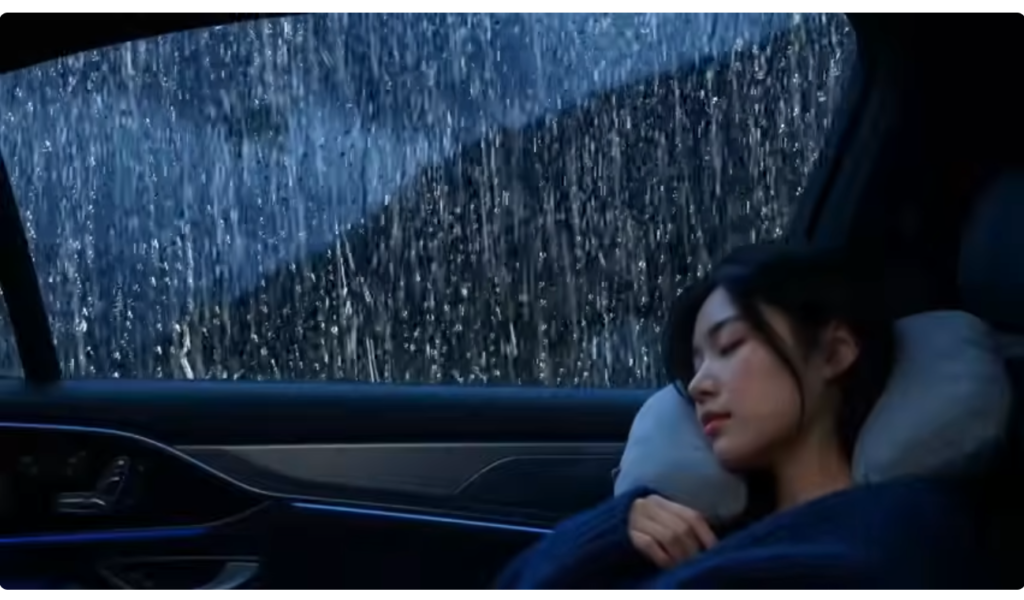
Rain falling on a car has a very particular acoustic signature. The metal roof and glass windows create a denser, more resonant sound. Each raindrop lands with a slightly sharp “tap,” and the overall texture often sits in a mid-to-high frequency range.
Because a car is a small, enclosed space, the sound can also feel close and contained — almost like it is surrounding you from every direction.
There is also a psychological layer to this. Many people associate car rain sounds with a specific memory: being driven somewhere while half-asleep, resting in the back seat, or feeling sheltered while rain falls outside. That association can make car rain sounds feel unusually comforting, even before you consciously notice why.
Car rain sounds tend to work well for:
- People who find comfort in enclosed, cocoon-like spaces
- Listeners who enjoy a brighter, more textured rain sound
- Anyone who associates rainy car rides with safety or nostalgia
- Short naps or quick wind-down sessions
- People who want an immersive sound that feels close and surrounding
Car rain may be especially appealing when you want a cozy, sheltered feeling — like being inside while the outside world becomes softer and more distant.
What Makes Tent Rain Sounds Different
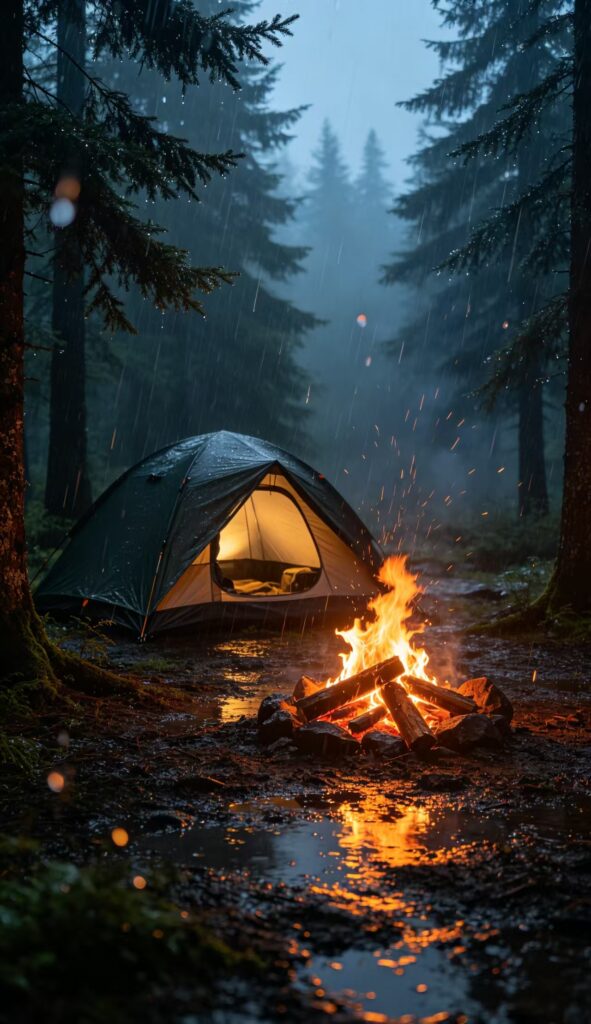
Rain on a tent has a softer and more diffuse quality. Tent fabric absorbs and muffles the impact of raindrops rather than reflecting them sharply. This creates a gentler, steadier texture with less hard detail in each individual drop.
Tent rain recordings also often include outdoor layers such as light wind, forest ambience, distant rustling, or occasional low thunder. Because of this, tent rain tends to feel more spacious and nature-oriented than car rain.
Tent rain sounds carry their own emotional associations: camping trips, being outdoors, resting under shelter, or listening to rain while surrounded by nature. For many listeners, this combination of “outside, but protected” is exactly what makes tent rain feel calming.
Tent rain sounds tend to work well for:
- People who prefer a softer background sound
- Listeners who want a wider, more atmospheric soundscape
- Anyone who finds comfort in camping, nature, or outdoor memories
- Longer sleep sessions
- People who find sharper rain sounds too noticeable at night
Tent rain may be the better choice when you want something gentle enough to fade into the background for hours.
Car Rain vs. Tent Rain: A Side-by-Side Comparison
The main difference between car rain sounds and tent rain sounds is the surface the rain hits. Car rain is usually sharper, closer, and more enclosed, while tent rain is softer, wider, and more nature-oriented.
| Car Rain Sounds | Tent Rain Sounds | |
|---|---|---|
| Sound texture | Sharper, denser, more detailed | Softer, more muffled, more diffuse |
| Frequency feel | Mid-to-high, more textured | Lower, warmer, gentler |
| Spatial feeling | Close, enclosed, surrounding | Open, atmospheric, spacious |
| Common associations | Car rides, safety, nostalgia, shelter | Camping, nature, outdoor comfort |
| Best for | Naps, reading, short relaxation, quick wind-down | Full nights, long background listening, calm ambience |
| Common extra sounds | Light traffic, wipers, cabin ambience | Wind, forest rustling, distant thunder |
| Listening feel | Immersive and cocoon-like | Natural and spacious |
So, Which One Is Actually Better?
There is no universal winner. The better option depends on what your mind and body respond to.
If you feel safest in smaller, enclosed spaces, car rain sounds may feel more soothing. The closer and more textured sound gives your brain something specific to settle into, which can help some listeners shift attention away from racing thoughts.
If you prefer open, natural environments — or if you find car rain slightly too sharp for a full night of sleep — tent rain sounds may be the gentler and more sustainable choice. The softer texture can make it easier for the sound to fade into the background over time.
A simple way to test this is to try both on different days:
- Listen to car rain sounds during a short nap or while reading before bed.
- Listen to tent rain sounds on another night as you wind down.
- Notice which one you stop consciously hearing first.
The rain sound that “disappears” into the background fastest is often the one your brain finds easiest to relax with.
When Car Rain Sounds May Be Better
Car rain sounds may be a good fit if you like a close, enclosed atmosphere.
They can work especially well when you want the feeling of being inside a protected space while rain falls outside. This is why car rain often feels nostalgic or emotionally comforting for people who connect it with quiet drives, late-night rides, or childhood memories.
Car rain may be better for:
- Short naps
- Reading before bed
- Relaxing after work
- Study or focus sessions
- People who like cozy, enclosed spaces
- Listeners who enjoy detailed rain textures
If you want a calm but immersive sound, car rain can be a strong choice.
When Tent Rain Sounds May Be Better
Tent rain sounds may be better if you want something softer and more spacious.
Because the sound is more diffused, it may be easier to leave playing for longer periods. Tent rain also works well for listeners who enjoy nature ambience, camping memories, or a sense of being sheltered outdoors.
Tent rain may be better for:
- Overnight sleep
- Long relaxation sessions
- Meditation
- Nature ambience
- People who prefer softer rain sounds
- Listeners who dislike sharp tapping sounds
If you want rain sounds that feel gentle, natural, and less attention-grabbing, tent rain may be the better choice.
The Science Behind Why Rain Sounds Can Feel Relaxing
Regardless of which type you prefer, rain sounds often work because they provide a steady and naturally variable background sound.
Rain is not exactly the same as white noise, but it can function in a similar way for some listeners. It may help make sudden environmental sounds less noticeable, such as a door closing, traffic outside, or someone moving in another room.
Rain sounds may support relaxation by:
- Masking sudden noises that could interrupt rest
- Creating a steady auditory background
- Giving the mind something predictable to settle into
- Making a room feel calmer and less silent
- Adding a natural rhythm to a bedtime routine
That said, rain sounds do not work the same way for everyone. Some people relax more with pure white noise, some prefer music, and others sleep best in silence. The best choice is the one that feels comfortable and does not become distracting.
For a deeper comparison, you can read our guide to [Rain Sounds vs. White Noise for Sleep.
Car Rain, Tent Rain, and White Noise: What’s the Difference?
Car rain and tent rain both belong to the broader world of sleep sounds, but they feel very different from traditional white noise.
White noise is more uniform and static-like. Rain sounds are more natural and varied. Car rain tends to feel sharper and closer, while tent rain feels softer and more open.
A helpful way to think about it:
- White noise: steady, neutral, mechanical
- Car rain: close, textured, enclosed
- Tent rain: soft, natural, spacious
- Forest rain: immersive, organic, nature-focused
- Window rain: gentle, familiar, home-like
That is why different rain sounds can work better for different moods and sleep situations.
Our Recommendation
If you are not sure where to start, try this simple test:
- Play 30 minutes of car rain sounds during a short afternoon nap or while reading before bed.
- On a different night, play 30 minutes of tent rain sounds as you fall asleep.
- Pay attention not only to which one feels nicer at first, but which one becomes less noticeable over time.
For many people, the best sleep sound is not the most dramatic one. It is the one that quietly blends into the background.
You can also explore our full guide to the [Best Rain Sounds for Sleep] if you want to compare car rain, tent rain, window rain, forest rain, roof rain, and other relaxing rain sound styles.
If you are building a calmer nighttime routine, you may also like our [Recommended Sleep Setup] guide, where we cover simple tools such as speakers, sleep headphones, pillows, blackout curtains, and other bedroom comfort ideas that may pair well with rain sounds.
FAQ
Is rain sound white noise?
Not exactly. Rain sounds are often compared to white noise because they can create a steady background sound, but they are not the same thing.
Many rain recordings feel closer to pink noise or brown noise than true white noise because they often sound warmer, softer, and less harsh in the higher frequencies. The exact sound depends on rain intensity, the surface being hit, the recording environment, and microphone placement.
Is car rain better than tent rain for sleep?
Car rain may be better if you like a close, enclosed, cocoon-like sound. It often feels immersive and comforting, especially for people who associate rainy car rides with safety or nostalgia.
Tent rain may be better if you prefer a softer, more natural background sound that can play for longer periods without drawing too much attention.
The better choice depends on your personal comfort and listening habits
Final Thoughts
Car rain sounds and tent rain sounds can both be calming, but they create very different sleep environments.
Car rain feels close, enclosed, and nostalgic. Tent rain feels soft, open, and nature-focused.
The best choice is the one that helps your mind stop tracking the sound and allows it to fade into the background. Try both, keep the volume low, and notice which one feels easiest to relax with.
Looking for more rain sounds? Explore our [Best Rain Sounds for Sleep] guide, compare [Rain Sounds vs. White Noise], or visit our [Recommended Sleep Setup] page for simple bedroom comfort ideas that may help create a calmer nighttime environment.